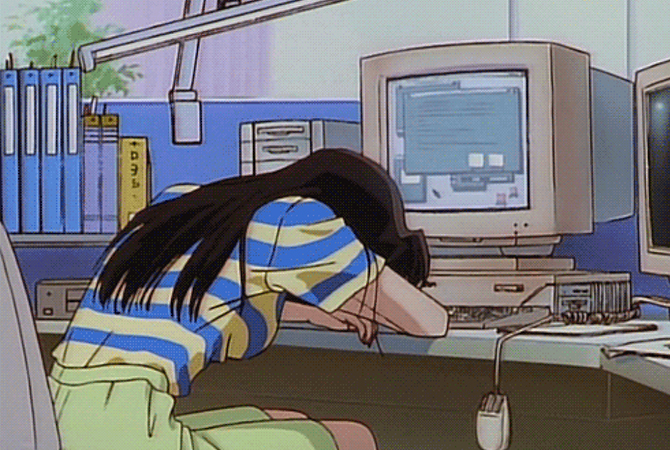
Today is one of those days.
Period day. Cramps, cravings, random crying. The weather’s not helping either. And like clockwork, the flashbacks come… not the sweet kind, but the kind that sting. Isn’t it strange how bad memories have a way of looping on repeat?
Sometimes I wonder if I had any truly happy childhood memories at all. I know I did. But when I try to recall them, it’s like there’s a fog. Instead, all I see is her, my so-called aunt.
Let’s begin this chapter with her.
She was married to my mom’s elder brother, which, by default, made her my “aunt.”
Not by blood, not by bond- just a title forced by marriage. It still baffles me how easily marriage can make strangers family, and how we’re taught to accept that without question. Like, why?
She came from a wealthy family, She had a respectable, high-paying government job; she was the superintendent of some department. I didn’t even know what that was, to be honest. I still don’t, exactly.
As a kid, I just thought, “Wow, she buys things, she must be rich!” But as an adult, when I look back… sure, she was rich. But classy? She was far from it. Polished? Sure. Powerful? Definitely- she was even on the heavier side, so she physically looked powerful too. Honest? Highly doubtful. Corruption reeks everywhere in India, and I wouldn’t be surprised if most of her money was black money. She was educated- and I think that’s it. Education gave her degrees, not decency. Wealth gave her comfort, not compassion. She had everything a person could use to uplift others, but she used it to wound.
Anyway, back to the story. At that time, I lived with my grandmother, who stayed in the family home. Her son=my uncle and his wife (the aunt) lived there too. This was my grandparents’ house. But in India, houses don’t always work like that. Sons stay. Daughters leave. Daughters come back only as guests, never owners. That injustice always left a bad taste in my mouth.
But every case is different, depends on family but most Indian families are traditional and conservative. For instance, this aunt actually lived in her own parents’ house most of the time, because her daughter stayed there for her education. She would drop by like a surprise bomb, as if she wanted to keep a check on things and stay for weeks that felt like months and then move to wherever she was going. When she came, the tension filled the entire house.
And here’s where the nightmare began.
My aunt would beat my grandmother when she was around. Not once. Not twice. Daily.
I was in elementary school- a child! and I watched the violence unfold like a recurring horror TV show I never signed up for. Till today, I don’t know exactly what the fights were about.
But I do know this: It left some scars that I still carry to this day.
It made me question relationships-with family members, and people in general. It made me lack trust. When you grow up witnessing domestic violence, even if it’s not directed at you, it changes you. It rewires your brain. Your nervous system is always on high alert. You don’t feel safe-not even in your own home, the one place that’s supposed to protect you. You learn to read the room fast. You notice the shift in someone’s tone, the way a glass is set down, the silence before the storm. You learn how to disappear without leaving.It made me anxious. Hyper-aware.
It made me freeze during conflict later on, because that’s what I did as a kid. I froze and watched or simply said nothing. It made me afraid of loud voices, angry people, and unpredictable situations.It made me doubt love, because love in my house came with screaming and fear. It made me emotionally guarded, slow to trust, and constantly questioning my worth.
I didn’t know what a peaceful home felt like, and part of me still doesn’t. The only day we felt peace was the day my grandmother and I were kicked out of my grandparents house in the middle of the night. I dont know where we spend the night- that memory is still a blank space.
That kind of trauma doesn’t leave you when you leave the house.It literally grows up with you.
When you get older, though, you don’t want to keep identifying with that fearful, frozen version of yourself, the little kid who stood helpless in the middle of all that chaos. You try to outgrow it. You tell yourself, “That was then. I’m stronger now.” But trauma doesn’t care about age. It doesn’t leave just because you try to leave it behind, or because you’ve now grown taller, or look nothing like you used to. It sticks to you like dampness in old wooden walls…silent, spreading, and only noticed when everything starts to rot.
In my twenties, things started surfacing, panic attacks that felt like they came out of nowhere. Sudden waves of fear, shame, or anger I couldn’t explain. And I realized… I had never actually processed what happened. I had buried it under years of trying to “move on.” “I am okay” “What can I even do about it now?” But your body doesn’t forget. Your nervous system remembers everything.
So I started to sit with it. I started asking: Why was she like that? Why did she need to control everything? Why was she so cruel, so angry, so endlessly mean? Why did she create an environment like that for everyone including herself?
I started thinking back, all the facts a child could remember, and tried answering the WHYs. It was complex. I cant expect to get the whole picture and understand why but these are the simple facts I knew:
I know my uncle was an alcoholic. I know my aunt was the breadwinner. My grandmother a woman in her late 50s unemployed and looked after by her other children. Since my aunt was the bread winner- maybe in her mind, that gave her the right to rule the house like a tyrant? Like most domestic abusers, maybe she thought being the one with the paycheck made her untouchable? Because she was earning.
And we weren’t. Because that made her “powerful.” And we were “burdens.”
She wasn’t paying for my school, my books, my food though. As far as I recall, it was all paid by my parents. I hope. But I guess just knowing I was helpless, knowing I had no say, no way out, gave her some twisted sense of power? That’s what I felt growing up at least, that my existence annoyed her. That the mere fact of me being there, quiet, existing was enough to trigger her rage.
And then, the most confusing part: her victim mindset. It was really hard to understand. Which I got to hear from her daughter “the cousin I truly adored half my life”
So the aunt- truly believed the world was against her. She brainwashed my cousin-who, honestly, I don’t blame cause she’s her only daughter, after all. Raised under her roof with love, fed her version of the truth day after day.
According to them, my aunt was the one who had to “suffer” everyone else. It was easier for people close to her to believe her version of the story, especially my cousin, who didn’t even live in that house. But the horror we endured began every time my aunt returned from her visits to her maternal home. Those were the worst days. Her anger would come back with her, sharp and loud, like she had been recharged with new resentment. Oddly enough, the only times I felt safe were when she brought my cousin along. On those days, there were no fights. Her performance as a mother would temporarily take over the role she usually played in that house: the tyrant. That’s part of why I always admired my cousin. When she was around, I could breathe. She unknowingly acted as a shield, just by existing.
Meanwhile, her mother constantly portrayed herself as the glue holding the family together. As if her screaming, her slaps, her relentless insults were all some form of unappreciated, unpaid labor of love. She acted like she was the only one making sacrifices, while the rest of us were nothing more than burdens, feeding off her supposed martyrdom. She looked down on us. Talked about us like we were nothing. And what stings the most is the way she rewrote the story, twisted everything. I didn’t care to go into it because it genuinely made me feel sick. And they called themselves adult. It was sick!
And everything she told her side of the family? Twisted beyond recognition. According to her, she was the victim. The one being abused. She painted herself as the one who endured endless suffering. Meanwhile, the real story, the one I saw with my own eyes, was ignored. My grandmother, the same woman I saw get hit, yelled at, humiliated day after day, was somehow cast as the monster.
Look, I’m not saying my grandmother was a saint. I’ve lived with her too. I know she’s a difficult woman-stubborn, sharp-tongued, impossible at times. But did she deserve the violence? The beatings? The constant erosion of her dignity? And those lies about how much my aunt “suffered”? Maybe she did. Maybe in her own way, she was hurting. But how do you expect me to sympathize with someone who caused so much pain? Who turned the house into a war zone? People say hurt people hurt people, but that’s not always true. Not all hurt turns violent. Sometimes hurt just sits quietly. Sometimes it chooses not to pass the pain along. What my aunt did wasn’t pain- it was control, it was anger, it was something else entirely.
And you know what? My grandmother never talked about it. Not then. Not now. Maybe she was ashamed? Maybe she was scared? Maybe she thought no one would believe her? Or maybe she just learned to swallow it all like generations of women before her. I’ll never really know. But what I do know is this: She never told her side of the story. The people around us saw what happened, and they helped sometimes. But she never once spoke to me about it. And that silence still echoes. She shared it with her own sisters but I was never part of their conversations so she still doesn’t want to talk about it. She does say it was one of the most painful times in her life, but that is all.
Meanwhile, my aunt walked around loudly telling hers, twisting facts, playing the victim, rewriting the narrative. I was sick to my stomach. And every time I heard it, I wanted to scream. To tell her to stop. To tell everyone what I saw. But I didn’t. Because maybe… that scared little girl still lived inside me.
And truthfully, she did.. for years.
I stayed in touch. I played along. Because everyone else was still in touch. I acted like nothing had happened, like the past didn’t exist. I smiled at family gatherings, showed up for dinners, nodded at conversations where my reality was erased. I betrayed my own memories just to keep the peace. And it wasn’t until last year, when enough was finally enough, that I cut them off.
When it started again, like it always did. After her daughter, my cousin- got married, my aunt found a new reason to stir up drama. This time, the cousin joined in – it broke my heart. And she crossed a line I can’t even get into here. It’s a long, unnecessary story. But it was the final one.
And that’s when I finally said: no more. To this day, all I heard from my cousin is how terrible my grandmother supposedly was- and still is. Like everything I saw with my own childhood eyes was just some imaginary lie. Like none of it ever happened.
And that’s what broke me the most: She was hurting people, yet convinced she was the one being hurt. She was abusing power, yet crying about being unappreciated. She was a villain who saw herself as a martyr.
Trying to understand that kind of contradiction is what kept me up at night sometimes. Because no matter how much logic I apply, I’ll never really get WHY?
how someone can look into the eyes of a child and still choose cruelty, and then look into the eyes of their own child and call themselves the victim.
She’s no longer part of my life. But the trauma she left behind… well, that stayed for a while. It lingered in the background of my childhood like a shadow: shaping how I trusted, how I reacted, how I protected myself.
At the time, I didn’t know what to call it. I just knew that loud voices made me shrink, that conflict made me panic, and that I was always bracing for the next unpredictable moment. I learned to read moods like weather forecasts, learned to tiptoe around tension, learned to internalize everything just to keep the peace. Those weren’t just habits: they were survival.
And yet, strangely, those early scars gave me something too. Not gratitude for the pain…never that. But it gave me a kind of awareness. A hunger to break cycles. A quiet strength that came from knowing exactly what I don’t want to become.
Her violence taught me to crave gentleness and to try and be one. Her chaos taught me boundaries.
And the day I finally cut ties, I felt a calm I hadn’t known in years. No revenge. No dramatic closure. Just silence. Peace.
That was my introduction to her.
The Aunt.
 Millennial's Diary
Leave a comment